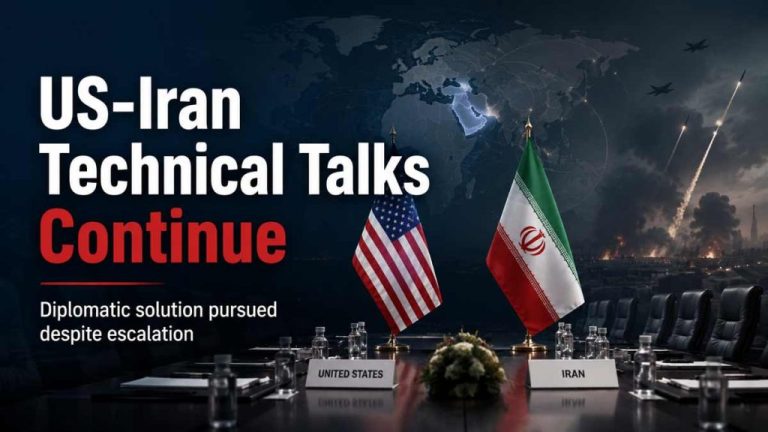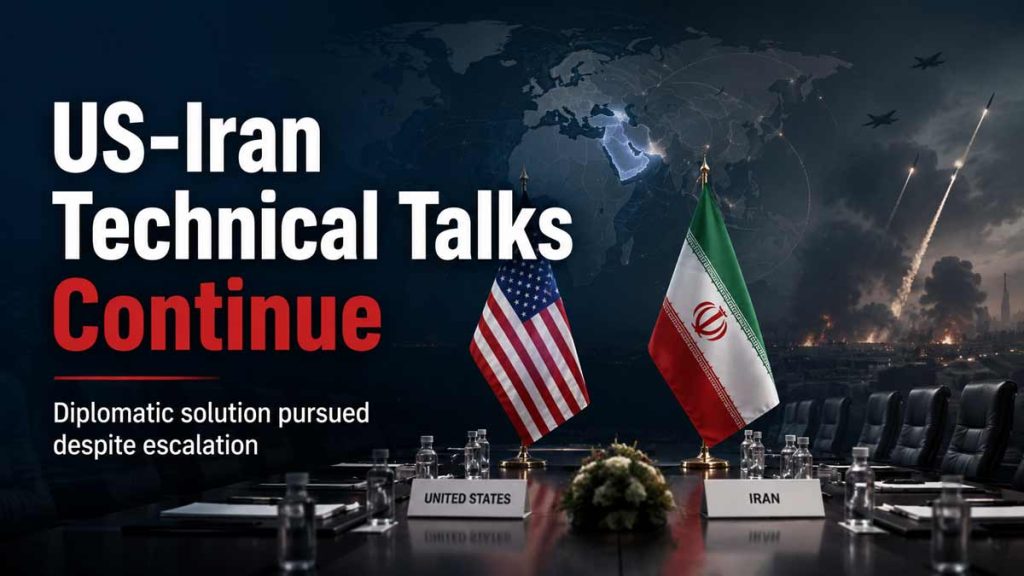
The United States has reaffirmed its commitment to diplomacy with Iran, saying technical-level discussions remain ongoing despite a recent surge in military tensions across the Middle East.
According to US officials, Washington continues to pursue a negotiated solution while working with regional partners to prevent further escalation and revive broader diplomatic efforts.
Officials said no new US military strikes had been carried out in the hours leading up to the latest statement, adding that technical talks with Iranian representatives remain active despite the deteriorating security situation.
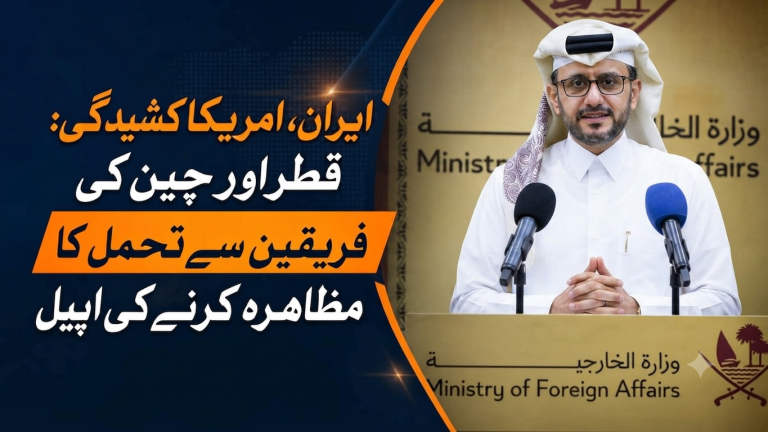
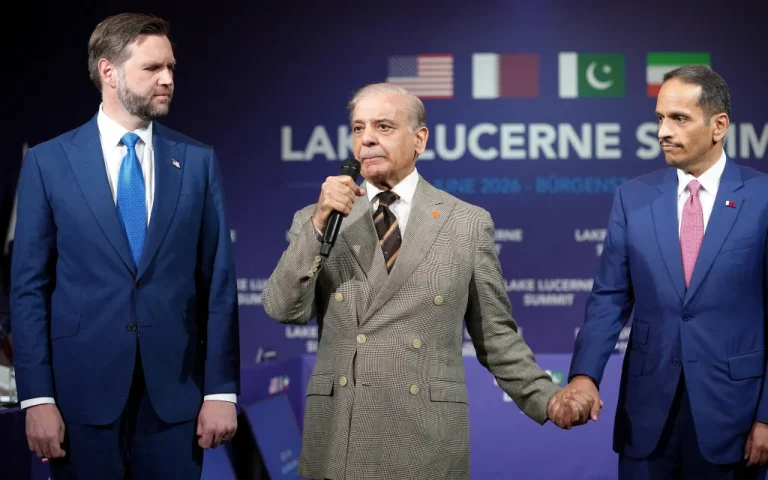
The discussions are aimed at reducing tensions and creating conditions for a broader agreement on key issues between the two countries. Regional mediators, including Qatar, Pakistan, Türkiye, Egypt, and Saudi Arabia, are reportedly engaged in diplomatic efforts to encourage dialogue and prevent further conflict.
Earlier rounds of technical negotiations in Doha reportedly focused on maritime security in the Strait of Hormuz and the possible release of frozen Iranian assets. Officials indicated that Iran’s nuclear programme would be addressed during future stages of the negotiations.
The diplomatic efforts come amid renewed military exchanges between Washington and Tehran.
On July 8, the United States launched strikes against Iranian targets, stating that the operation was intended to protect commercial shipping and ensure freedom of navigation in the Strait of Hormuz. US Central Command said the action followed attacks on commercial vessels in the strategic waterway.
Iran later responded with strikes targeting locations in Kuwait and Bahrain, where US military facilities are based. The exchange of attacks has raised concerns that recent diplomatic progress could be undermined.
Iranian officials also claimed to have targeted additional US military infrastructure across the Gulf region. However, several battlefield claims made by both sides have not been independently verified.
US President Donald Trump has expressed doubts about the future of the interim agreement between Washington and Tehran, saying he believes the arrangement may no longer be viable. Despite those remarks, US officials maintain that diplomatic channels remain open.
Regional mediators continue working to reduce tensions and pave the way for another round of negotiations between technical teams. Diplomatic contacts involving Pakistan, Qatar, Türkiye, Egypt, and Saudi Arabia remain active as part of broader efforts to restore dialogue.
Iranian Foreign Minister Abbas Araghchi has also held consultations with counterparts from Türkiye, Oman, and Pakistan, with discussions focusing on preventing further military escalation and encouraging a return to diplomacy.
While military activity continues to fuel uncertainty across the region, officials from both sides have indicated that technical negotiations remain an important avenue for resolving outstanding disputes.
Diplomats caution that significant challenges remain, but ongoing dialogue is viewed as an essential step toward reducing tensions and working toward a more durable agreement between the United States and Iran.
About the Author